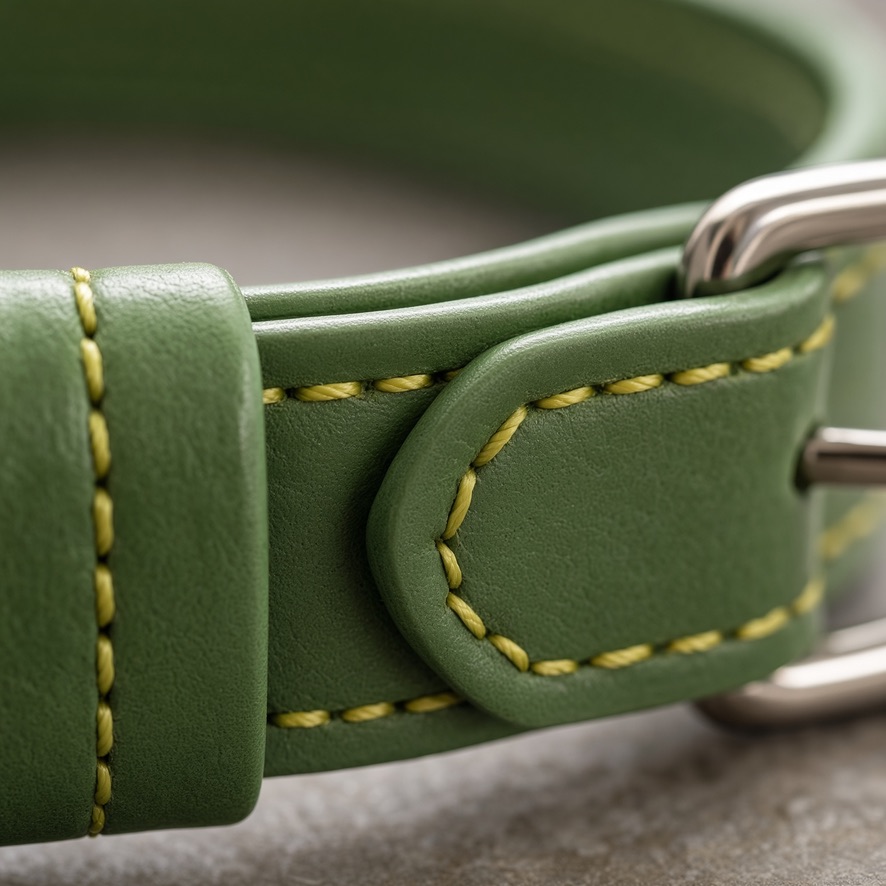
Six hours of work,
for one dog.
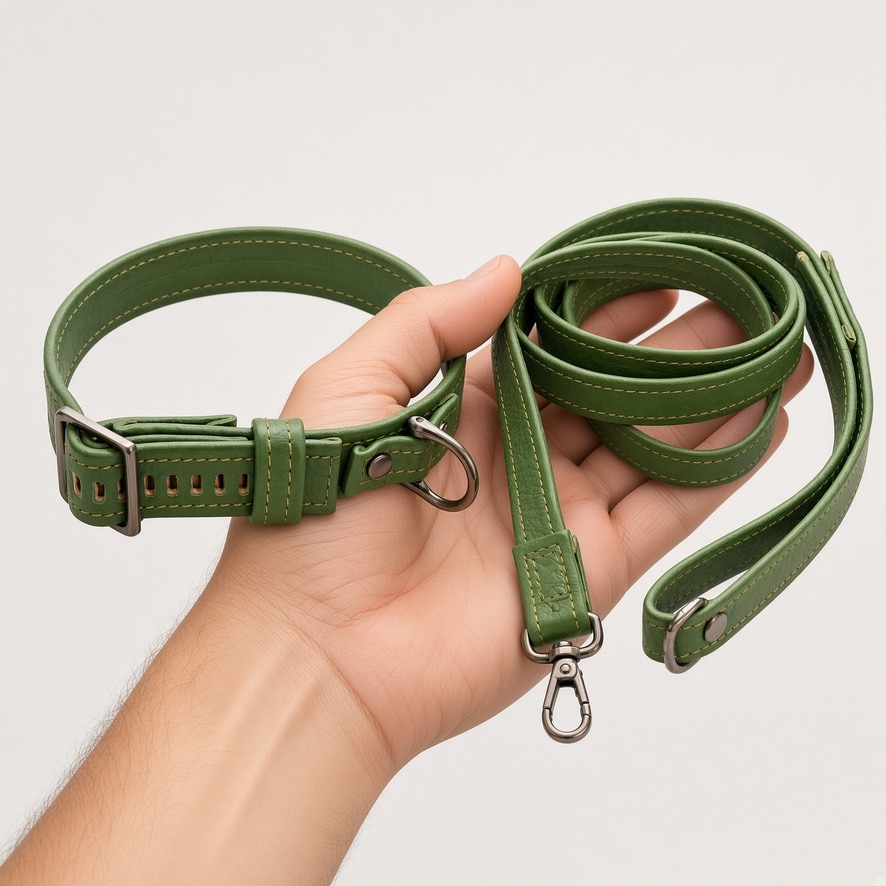
Collar and lead, cut and stitched by hand to a single set of measurements. The founding edition is fifty sets.
A collar is worn every day of a dog's life. It is the one object that never comes off. Almost everything made for that job is made quickly, in quantities, by machines that never meet the animal.
We began Loomi because our own dog wore through four collars in two years, and because none of them were ever really hers. The buckle sat wrong. The edge frayed at the throat. The leather went grey where it should have gone dark.
So we learned to make one properly. Then we learned to make it again, better, and slowly enough that the sixth hour matters as much as the first. This is not a faster way to make a collar. It is the only way we are willing to.
Selection
A hide is read before it is cut. Neck and shoulder for the strap; the belly is set aside. Most of a hide is refused.
Cutting
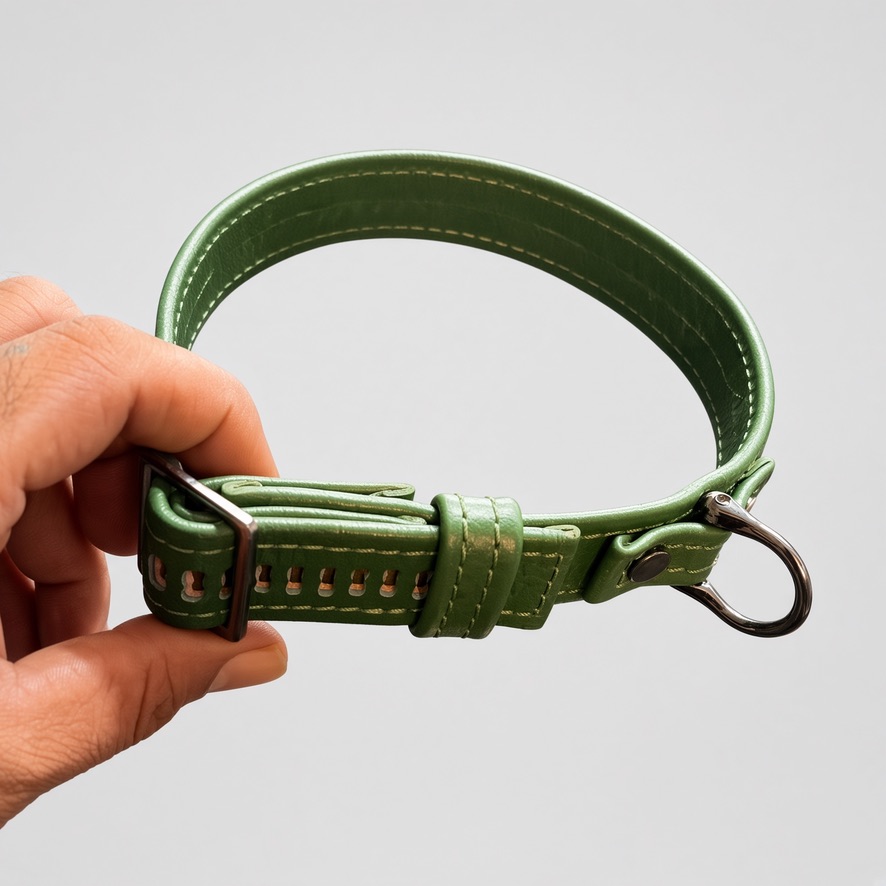
One straight pass with a round knife against a steel rule. Collar and lead are cut from the same hide, on the same day, so they age together. There is no second attempt on a strap.
Skiving
The lining is thinned by hand so the collar sits flat against the coat rather than standing away from it.
Stitching
Two needles, one thread, pulled by hand. A saddle-stitch does not unravel when a single stitch is cut.
Edges
Bevelled, damped, sanded, burnished. Four passes. The edge is the part of a collar that ages first.
Setting
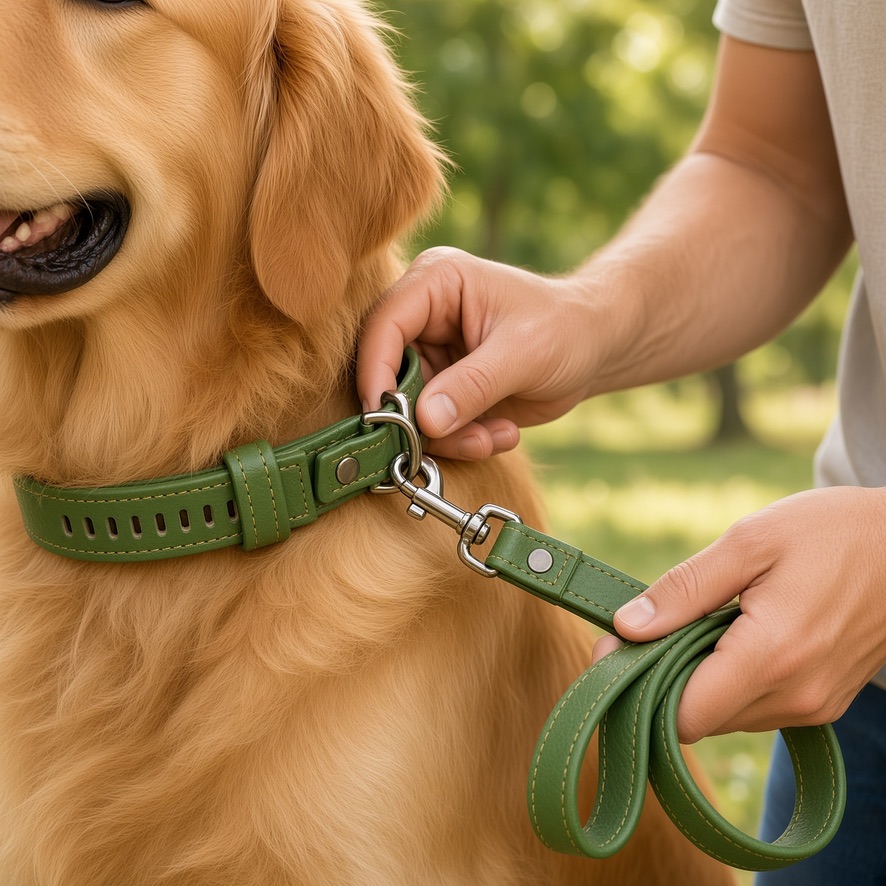
Hardware set by hand, the set rested overnight and looked at again in daylight. Five to six hours of work, across three days.
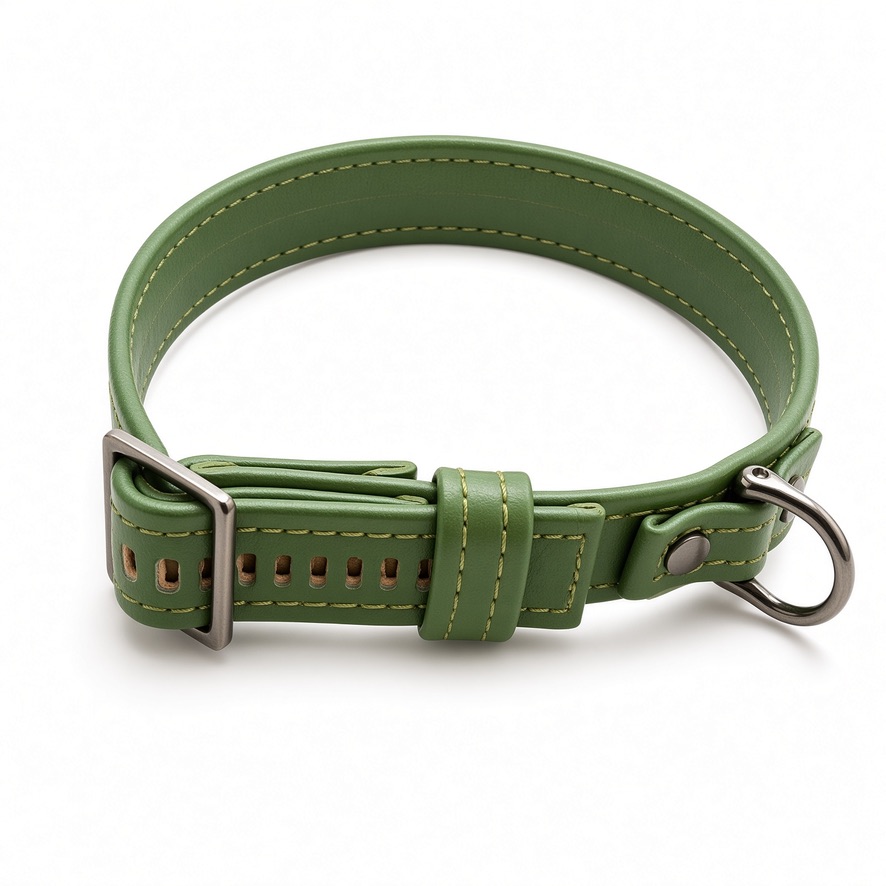
Two pieces, made as one.
The collar is cut to your dog's neck. The lead is cut from the same hide, the same day, so the two darken at the same rate rather than looking like strangers in a year.
The set is not sold in parts. A collar without its lead ages alone.
There are no sizes.
We ask for four measurements: the neck at its working position, the neck at the base of the skull, the depth of the coat, and the weight of the dog. From those, the strap is cut to a length that exists once.
Holes are punched where your dog wears it, not at even intervals. Growing dogs are given a longer travel and a second row, free, in the first year.
If a measurement is wrong, we remake the strap. Once, without question, without cost.
Send it back, always.
Stitching, edges, hardware, holes — for as long as the collar exists, we repair it. We arrange the courier to collect it, and we do not charge for the work, or ask when you bought it.
Leather that has been worn for years is repaired, not replaced. It comes back darker at the throat and softer at the fold, and that is the point.
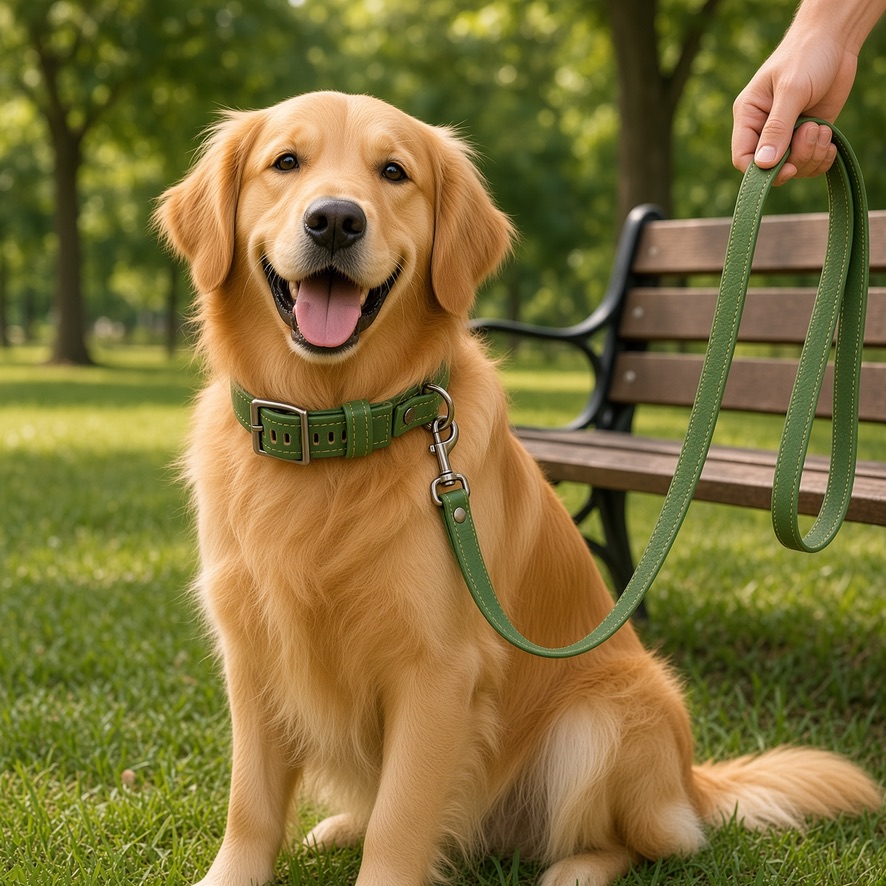
- People who intend to keep one object for a decade.
- Dogs who wear a collar every day, in weather.
- Those who would rather wait thirty days than choose from a shelf.
- People who read a specification before a price.
- Anyone who needs it this week.
- Puppies still two sizes from their adult neck.
- Dogs who swim daily — leather does not enjoy that life.
- Anyone comparing this to a collar that costs less.
The first fifty pieces are numbered 001 to 050 and stamped on the inner face. Each one is entered by hand in the workshop book, with the dog's name beside it.
Fifty is where a new workshop stops, not where it stays. We would rather learn on fifty collars we can stand behind than take orders we cannot finish well. When the edition is complete, the numbering ends and the book stays closed until we are ready.
The workshop is entered by invitation.
If you hold a code, enter it. If you do not, leave a number and we will write when the next place opens.